The PaymentKit Alternative to Stripe Billing

Stripe Billing charges 0.7% of your billing volume to run subscriptions on exactly one processor: Stripe. PaymentKit gives you the same billing engine plus multi-processor routing, native dunning, and revenue metrics across your whole stack — and Stripe stays connected as a processor the entire time.

Stripe Billing Alternative

Keep Stripe connected · Add processors anytime · Own your tokens

22%

Average reduction in processing fees

Average lift in failed-payment recovery

12.4%

Annual orchestrated volume

2.5B

Currencies supported

140+

Why Teams Outgrow Stripe Billing

THE PROBLEM

Stripe Billing is a great start: one integration, solid subscription tooling,and it just works. The ceiling shows up as you scale, and it’s always the same four walls.

You’re locked into Stripe as your only processor

Stripe Billing charges subscriptions through Stripe, full stop. You can’t route a transaction to a cheaper processor, add a backup for outages,or negotiate rates with leverage — there’s nowhere else for the charge to go.

Dunning is basic – smart retries require extra tooling

Smart Retries pick a good time to retry, but every retry hits the same processor with the same result profile. Recovery emails and flows are limited enough that teams bolt on dedicated dunning tools — another vendor, another fee.

Revenue metrics need stitching together from multiple sources

MRR lives in the Stripe dashboard, deeper questions need Sigma and SQL, and most teams end up piping data into a separate analytics tool.Your single source of truth becomes three tools that almost agree.

Switching processors means rebuilding your entire billing stack

Because plans, subscriptions, and vaulted cards all live inside Stripe,moving processors means migrating billing logic, customer data, and tokens at once. The longer you stay, the bigger that project gets.

You Don’t Have to Leave Stripe

The good news

This isn’t a rip-and-replace. PaymentKit moves the billing layer — plans,subscriptions, dunning, metrics — one level up, and Stripe plugs in underneath as one of your payment processors.

Keep the processor, replace the billing layer

Your Stripe account, negotiated rates, and vaulted cards keep working from day one — existing subscriptions keep charging without interruption. What changes is where the intelligence lives:routing, retries, recovery, and reporting move to PaymentKit, so Stripe becomes a processor you use rather than a platform you’re locked into. When you’re ready, adding a second processor is a configuration change, not a rebuild.

A product-by-product comparison, including where Stripe still wins.

Stripe Billing vs PaymentKit: What You’re Missing

Feature comparison

Billing

Stripe Billing

Full subscription lifecycle support

Trials, coupons, pauses, and mid-cycle plan changes.

Stripe Billing

Usage-based & hybrid pricing

Flat, tiered, and metered models in a single billing flow.

Stripe Billing

Developer test clocks

Fast-forward time to simulate complex billing cycles instantly.

Stripe Billing

Billing logic independent of your processor

Plans and subscriptions that aren’t welded to one PSP’s rails.

Stripe Billing

Billing survives a processor switch

Change or add processors without rebuilding your billing stack.

Stripe Billing

Everything Stripe Billing does day to day, with the billing layer decoupled from any single processor.

Payment Orchestration

Stripe Billing

Smart payment routing

Route each charge to the optimal PSP on cost and approval rates.

Stripe Billing

Multi-processor support

Run Stripe, Adyen, Authorize.net, and PayPal side by side.

Stripe Billing

Automatic failover

Keep charging through a processor outage, automatically.

Stripe Billing

Cross-processor decline recovery

Retry a failed payment on a second processor, not just later on Stripe.

Stripe Billing

Agnostic vaulting

Total token portability; never locked to one PSP’s vault.

Stripe Billing

Fraud controls and SCA

3DS optimization and custom fraud rules to minimize risk.

Stripe Billing

Route, retry, and optimize payments across every PSP from a single integration —Stripe Billing only ever charges on Stripe.

Revenue Metrics

Stripe Billing

Metrics across every processor

MRR, churn, and LTV unified across all PSPs and currencies.

Stripe Billing

PSP performance benchmarking

Compare processor success rates to tune your routing.

Stripe Billing

Advanced segmentation without SQL

Slice revenue data by any variable — no Sigma queries or add-on fees.

Stripe Billing

Real-time anomaly alerting

Instant notifications when metrics deviate from the norm.

Stripe Billing

Automated revenue recognition

Audit-grade RevRec schedules and reporting.

Stripe Billing

A single source of truth for revenue data across every processor. Stripe keeps the edge on automated revenue recognition.


Pricing per each platform’s published rates: Stripe Billing adds 0.7% of billing volume (pay-as-you-go) on top of Stripe’s standard 2.9% + $0.30 processing; PaymentKit is $99/mo + 0.65% on top of the processor ratesyou negotiate. Stripe’s automated revenue recognition remains a genuine advantage if audit-grade RevRec is your priority.

What PaymentKit Adds on Top of Stripe

Top 4 reasons

1

Route payments across Stripe and other processors simultaneously

Stripe stays connected. Adyen, Authorize.net, and PayPal join it.

Every charge goes to the processor most likely to approve it at the best cost, with automatic fail over if one goes down. That’s payment orchestration — the layer Stripe Billing doesn’t have.

Higher acceptance rates through optimized, AI-driven routing.

Redundancy: a processor outage stops being a revenue outage.

Leverage: negotiate rates when your volume isn’t captive.

2

Native dunning – not a Stripe add-on

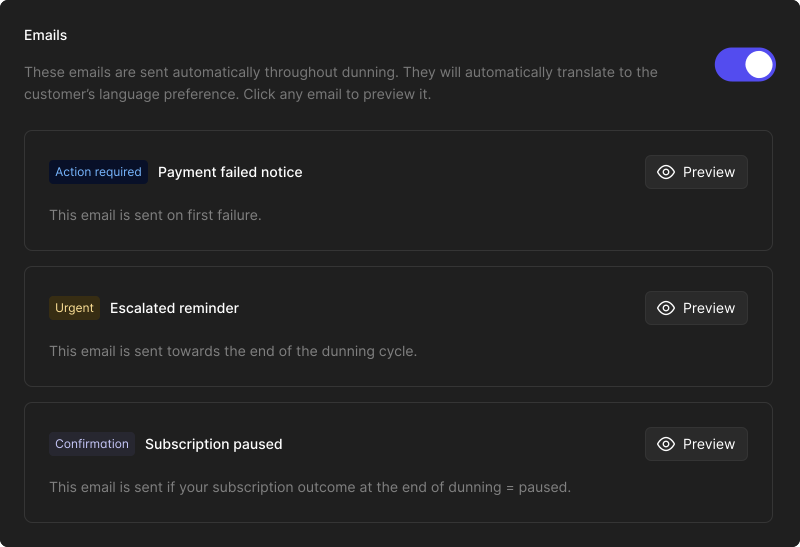
Smart retries, recovery emails, and a customer portal, built into the billing layer.

Failed payments retry on an adaptive schedule and can recover on a second processor — something no amount of Stripe dunning tooling can do, because Stripe only ever retries on Stripe.

Adaptive retry logic plus multi-channel recovery emails.

Self-serve portal for customers to update payment methods.

Cross-processor recovery for declines Stripe can’t save.

3

Revenue metrics across every processor in one place

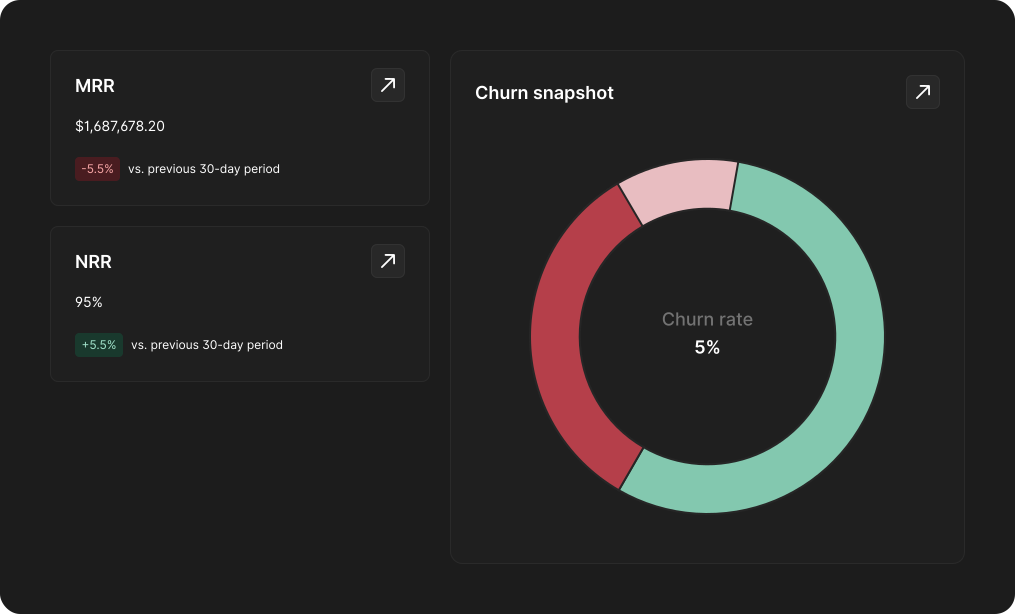
MRR, churn, LTV, and cohorts — live, self-serve, and unified.

No Sigma queries, no third-party analytics subscription, no reconciling three dashboards. One source of truth that stays accurate as you add processors.

Comprehensive reporting on growth, conversion, and retention.

PSP benchmarking to see which processor earns its volume.

Real-time anomaly alerts when metrics deviate from the norm.

4

Full token portability – not locked to Stripe’s vault

Your customers’ payment methods belong to you, not your processor.

New payment methods are tokenized in a processor-agnostic vault,so any processor you connect can charge them. Leaving a processor stops being a migration project.

Agnostic vaulting with total data portability.

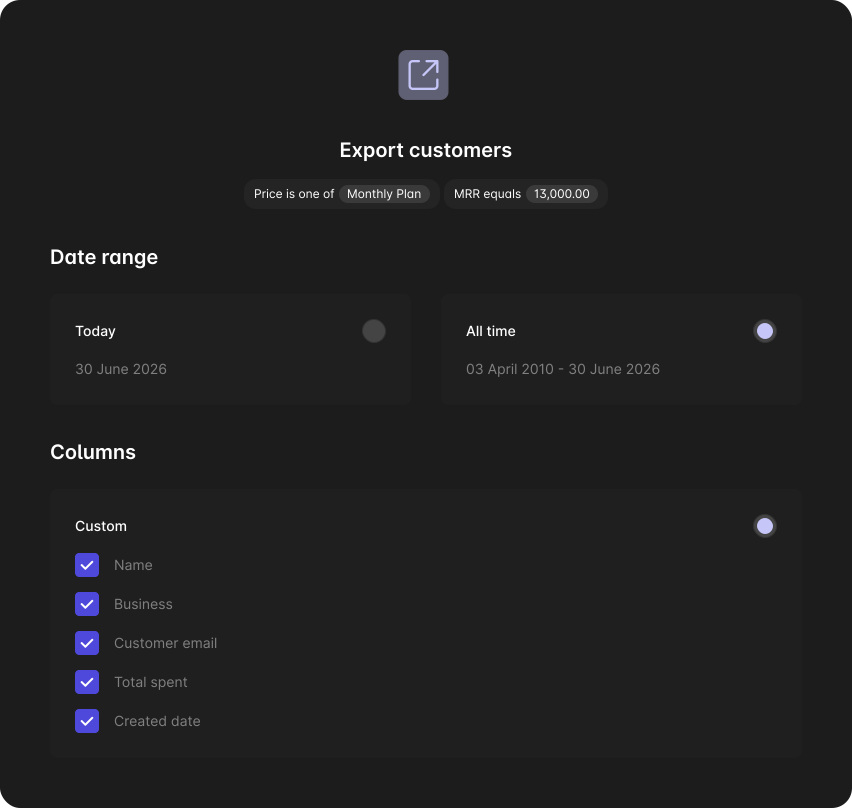
Export your data anytime — no ifs or buts about it.

Existing Stripe-vaulted cards keep working from day one.

Stripe Billing rarely stays alone. To get a complete subscription stack,teams assemble a tool chain around it — and the tool chain becomes the problem.

The Piecemeal Problem With Stripe Billing

The hidden cost

Stripe Billing plus Stripe Radar plus analytics tools plus dunning tools

Billing from Stripe, fraud from Radar,metrics from a ChartMogul or Baremetrics,recovery from a dedicated dunning tool.Four subscriptions, four dashboards, four vendors to manage — each taking its own cut of your revenue.

Every integration is another failure point

Webhooks drop, API versions drift, and syncs silently stall. When a customer’s payment state disagrees between tools,someone on your team spends an afternoon finding out which one is lying.

Metrics never fully sync across a multi-tool stack

Each tool computes MRR its own way, on itsown refresh cycle, from its own slice of the data. The numbers land close — but never identical, and “close” is a bad property for the metrics you run the business on.

Stripe Billing earns its popularity, and for plenty of teams it’s exactly the right call.

When Stripe Billing Is Still the Right Choice

Honest comparison

If you’re early-stage, process modest volume, and Stripe’s approval rates work for you, one integration with zero orchestration overhead is genuinely hard to beat. The same goes if you’re all-in on the Stripe ecosystem — Radar, Tax, revenue recognition, Sigma — and the 0.7% billing fee is small next to the engineering time it saves, or if a single processor covers every market you sell into. PaymentKit starts making sense when the math flips: when approval rates,processor fees, outage risk, or fragmented metrics start costing you real revenue — typically as volume grows past the point where 0.7% and single-processor declines are rounding errors.

Most teams are live within days — and because Stripe stays connected,there’s no revenue gap and no card migration on day one.

Migrating from Stripe Billing to PaymentKit

PRICING

Keep Stripe connected as your processor

Link your existing Stripe account with its negotiated rates. Vaulted cards and active subscriptions keep charging without interruption.

01

Move your subscription and billing logic to PaymentKit

02

Recreate or import plans,pricing, trials, and coupons.Flat, tiered, hybrid, and usage-based models are all supported.

Connect Adyen,Authorize.net, PayPal, or others and set routing and failover rules. This step can wait — orchestration works with one processor too.

Add additional processors when you’re ready

03

MRR, churn, recovery, and processor performance are live in one dashboard the moment your billing runs through PaymentKit.

Access unified metrics from day one

04

Frequently Asked Questions

FAQ

Yes, and it’s the most common setup. You connect Stripe to PaymentKit with your existing account and negotiated rates, and PaymentKit runs billing, routing, dunning, and metrics on top. Stripe keeps processing your payments from day one, and you can add more processors whenever you’re ready.
Multi-processor routing, automatic failover, cross-processor decline recovery, native dunning flows, an agnostic card vault, and revenue metrics unified across every processor. Stripe Billing is excellent subscription software, but it runs on exactly one processor: Stripe. PaymentKit adds the orchestration layer on top.

No. Because Stripe stays connected as a processor, your existing Stripe-vaulted cards keep charging without interruption. Going forward, new payment methods are tokenized in PaymentKit’s processor-agnostic vault, so they’re portable across every processor you add.
Alongside it. PaymentKit replaces the billing layer — the part Stripe Billing handles — while Stripe stays on as one of your payment processors. You stop paying Stripe’s 0.7% billing fee, keep its processing, and gain the option to route to other processors.
Stripe’s Smart Retries decide when to retry a failed payment, but every retry lands on the same processor. PaymentKit routes each charge to the processor most likely to approve it, fails over automatically during outages, and recovers declines by retrying on a second processor — revenue a single-processor setup can’t reach.
Yes. Flat, tiered, hybrid, and usage-based (metered) pricing are all supported, along with trials, coupons, upgrades, downgrades, prorations, and developer test clocks for simulating billing cycles.
Yes, you can start for free. The Standard plan is $99/month plus 0.65% of processed volume, with custom pricing available at scale.

Platform lock-in was our biggest risk. PaymentKit’s independent vaulting gave us total portability over our subscription data. We migrated seamlessly and boosted checkout conversion by 5%.

Marcus Thorne

Head of Engineering @ TweetDeleter

Go Beyond What Stripe Billing Can Do