Credit repair payments that keep your own record clean
Keep your existing processors · Go live in under an hour
Orchestrate the processors you already use
- Stripe
- Adyen
- Authorize.net
- Airwallex
- Checkout.com
- Paysafe





- +18%Approval-rate uplift
- 99.99%Routing uptime
- 20+Processors supported
- <50msAutomatic failover
How it works
Orchestration in three moves
Connect once, route everything, and let fail over and recovery run on autopilot, so a single decline, freeze, or shutdown never costs you a monthly plan payment or a setup that took months to underwrite.
- 01 · Connect
Plug in every processor
Bring Stripe, Adyen, Authorize.net, and your high-risk acquirers under one unified API. Add or swap processors without touching your checkout.
- 02 · Route
Send each charge to its best home
Every transaction is routed by card brand, BIN, currency, amount, and live approval performance, landing on the processor most likely to say yes.
- 03 · Recover
Fail over and retry, automatically
If a processor declines, slows, or goes offline, the charge reroutes in milliseconds and retries on a backup, so the sale still closes.
The platform
See orchestration at work
From a single control surface to real-time routing and recovered revenue. Here’s what running on PaymentKit looks like.
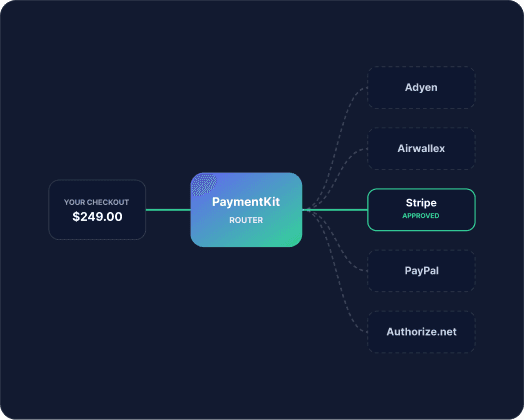
One router, every processor
Connect Stripe, Adyen, Authorize.net, and your high-risk acquirers, then let PaymentKit route each charge to the one most likely to approve.

Every payment method, one checkout
Give customers cards, wallets, and BNPL (Apple Pay, Google Pay, Link, Klarna, PayPal), all orchestrated behind a single integration.
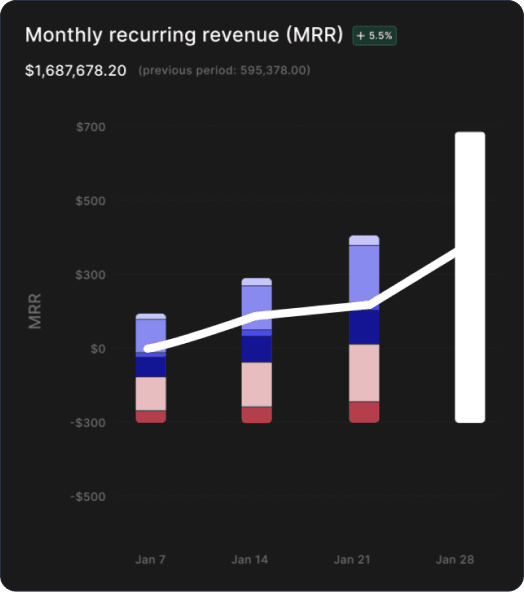
Grow and stabilize recurring revenue
For memberships, treatment packages, and product subscriptions, orchestration keeps renewals flowing and your monthly recurring revenue climbing, even when a single processor stumbles.
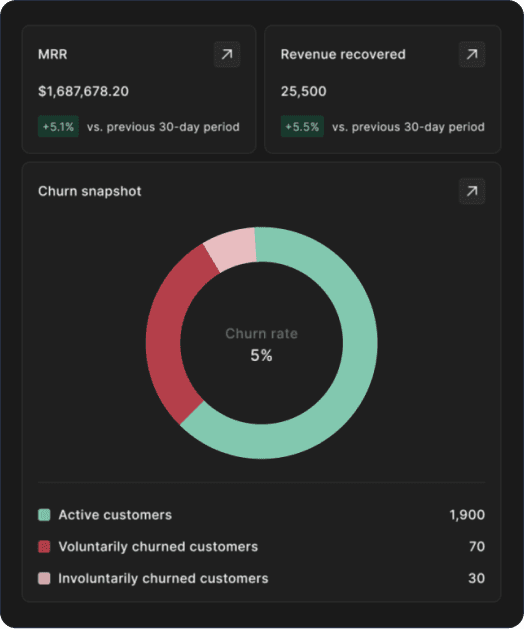
Recovery and churn, in real time
Track recovered revenue and churn across every processor from one dashboard, and see exactly what orchestration wins back.
Capabilities
Built for revenue that can’t afford to stop
Everything a credit repair organization needs to keep approvals high and payouts flowing, across every processor at once.
Universal PSP routing
One integration connects to any processor or acquirer. Direct traffic by rules you control, spread plan billing across accounts, or let live performance decide.
Zero-downtime failover
A processor outage or freeze no longer stops checkout. Traffic reroutes instantly to a healthy backup, with no customer-facing errors.
Cross-processor recovery
Soft declines get a second chance on a different processor, with retry timing tuned to historical success windows.
Approval-rate optimization
Routing learns which processor approves which customer profile, lifting authorization rates without you lifting a finger.
Fraud & chargeback shield
Chargeback protection with risk rules you set once and keep consistent across every processor: flag bad transactions while paying clients sail through.
Compliance & risk support
Guidance through underwriting and acceptable-use requirements so your credit repair merchant account stays open and your billing descriptors stay recognizable to clients.


Implementation
Launch with or without code
Build routing in the dashboard, or wire it up with a few lines of API. Either way, you go live in under an hour.
No code
Drag-and-drop routing rules
Set processor priority and add conditions by card brand, BIN, currency, or amount, then toggle fail over: no deploys, no engineers.
Prebuilt checkout components
Drop in PSP-agnostic, PCI-compliant payment fields and let PaymentKit handle the routing behind them.
Yes code
Live performance dashboard
Watch approval rates, fail overs, and recovered declines per processor in real time, and adjust rules on the fly.
One-click processor connect
Add or remove acquirers from a single screen. New processors join your routing pool instantly.
Single processor vs. orchestration
Why one processor is a liability
- Account shutdownSingle processorRevenue stops deadPaymentKit orchestrationTraffic reroutes, sales continue
- Frozen fundsSingle processorCash held for weeksPaymentKit orchestrationVolume spread, exposure limited
- Soft declinesSingle processorLost at first noPaymentKit orchestrationRetried on a backup processor
- Approval rateSingle processorCapped by one providerPaymentKit orchestrationOptimized across all of them
- Processor outageSingle processorCheckout goes downPaymentKit orchestrationFail over in milliseconds
- Switching processorsSingle processorRe-integration projectPaymentKit orchestrationA config change, not a rebuild
Who we support
Orchestration for every credit services business model
From solo credit repair organizations to national brands, PaymentKit gives credit services merchants stable, multi-processor infrastructure built to scale.
Credit repair organizations
Monthly plans billed after work is delivered, the CROA-compliant model, on infrastructure no single processor can end.
Credit monitoring & education
Subscription monitoring and financial education products with adaptive retries recovering failed renewals.
Business credit builders
Programs helping companies establish credit profiles, billed on recurring plans that survive account re-reviews.
Software-plus-service hybrids
Platforms pairing dispute software with done-for-you service, running both billing models through one orchestration layer.


The problem
Why credit repair businesses lose revenue on a single processor
Credit repair operates under the Credit Repair Organizations Act, which prohibits charging fees before services are performed. That single rule shapes the whole payment model: revenue arrives as monthly recurring plans billed in arrears, from consumers whose finances are already stressed. Card networks and banks treat the category as high risk, mainstream platforms prohibit it entirely, and the specialized acquirers that remain apply reserves, caps, and hair-trigger reviews. Approval today is no guarantee of approval next quarter.
Chargebacks are the standing threat. A client who doesn’t see score movement fast enough disputes three months of plan payments at once, and a handful of those clusters pushes the ratio past a processor’s threshold. When the freeze lands, every active plan’s next payment fails on the same day, and in this category a missed month often becomes a cancellation. Losing the account can mean months of re-underwriting before a replacement processor goes live.
Common triggers that get credit repair companies flagged on a single processor:
- Billing that looks like advance fees under CROA’s rules
- Chargeback clusters from clients disputing multiple plan months at once
- Score-improvement guarantees in marketing that regulators treat as deceptive
- Missing written contracts, disclosures, and cancellation rights CROA requires
- Telemarketing-sold services billed outside Telemarketing Sales Rule limits
- Billing descriptors clients don’t connect to the service they signed up for

Payment orchestration removes the fragility. Instead of betting the business on one provider staying happy, you distribute volume across several processors, so no single decision by a single processor can take you offline. Orchestration doesn’t replace good compliance. It protects you when a processor changes its mind anyway, and it keeps your risk and routing rules consistent whether you’re on one acquirer or six. That makes credit repair payment processing far more resilient than depending on a single merchant account.
Compliance & approval
What keeps credit repair merchant accounts stable
Acquirers that accept credit repair expect documented CROA compliance before approving (and to keep approving) an account. Meeting these standards lowers chargeback risk and separates you from the operators who gave the category its reputation. With orchestration, you apply them once and carry them across every connected processor.
Website & policy basics
- Written contracts with CROA-required disclosures and cancellation rights
- Marketing free of guaranteed score improvements
- Privacy policy, terms of service, and visible support contacts
Operational standards
- Billing timed to service delivery, never in advance
- Dispute and results documentation kept per client
- Billing descriptors clients recognize at a glance
- Fraud monitoring, 3DS, and PCI-compliant checkout